 |
The I ChingChapter 2 - How to Use the I Ching |
|
The first and crucial piece of advice for “using” the I Ching is ridiculously common sense, but which nevertheless many would-be I Ching practitioners seem to fail to consider: if you want to develop a good working relationship with the I Ching, you should read the entire I Ching.
It is surprising how many people have tried to make regular use of the I Ching, performing I Ching divinations, without actually having read the text from cover-to-cover. This is just as ill-advised as trying to use the Tarot for Tarot readings without first looking at all of the cards and getting to know them!
It may be that the excess of commentaries and the sometimes complicated language used in other versions of the I Ching have acted as a barrier, causing some practitioners to experience some intimidation when it comes to actually reading the whole of the text. Nevertheless, this is an essential condition to getting to know and understand the I Ching.
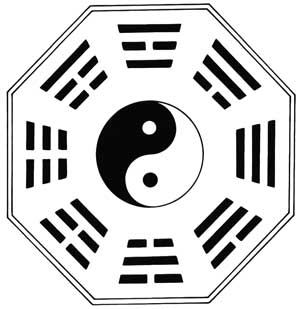
In addition to this, it is a good idea for a practitioner to spend time considering the Trigrams, how they interact with each other. Look at the lines that make up a Trigram; whether it has two broken lines, or two unbroken lines (or is completely broken or solid); and how this compares to the other trigrams. When you compare two trigrams, is only one line different, or two, or are all three different (making the trigrams direct opposites to each other)? How does this relate to the symbolism associated with that Trigram? Consider how those symbolisms interact: what images does it evoke in you to imagine Air in the bottom and Earth on the top (or vice-versa); or Sun on the top and the World on the bottom? Do two forces together sound complementary or oppositional? Do they look complementary side-by-side, or not so much? All of these are things to consider and keep coming back to.
Even as you continue to read the I Ching, and contemplate the trigrams (and you should continue to come back to these practices for as long as you intend to keep using the I Ching), you can begin to perform “divinations” with the I Ching.
Like all divinations, the I Ching does not so much predict the future, as it takes a really good look at the present: understanding the present, what forces affect it, allows one to get a good idea not only of where one is, but of where one is going. It is important while performing I Ching readings to remember that the reading is a kind of diagnosis of your state; it is about your current relationship with existence.
The literal translation of the word “I Ching” is “The Book of Changes”; this is because the I Ching system recognizes that existence is a constant state of flow and flux, nothing is ever static for very long; you are always moving, life is always moving around you. So just as two three-line trigrams unite into a six-line hexagram, that hexagram is in the process of changing, slowly or quickly, into another hexagram.
Most readings will have one or more “changing lines”, points of particular importance in the current situation because they represent where change is happening. These are lines that are presently weak but about to become strong, or presently strong but about to become weak; they will change the trigram they belong to into a different trigram, one element becomes another, and the overall situation evolves into a new hexagram. Thus any I Ching reading will (usually) involve three stages of interpretation: first, of the hexagram that represents the situation as it currently stands; second, of the changing lines and those specific details that are most important in the present situation; and third, the “future” hexagram that represents where the situation is moving toward.
It is possible for a hexagram to have no “changing lines”; this is a sign of a situation that is particularly stable for the moment, with little motion in the short term or opportunity to change.
I Ching Reading Methods
There are several methods for creating an I Ching reading. In the oldest uses of the hexagram, turtle shells were used to divine the component lines. Later on, a complex system of counting yarrow stalks was utilized. The modern methods tend to make use of coins, and some practitioners make use of more intuitive methods to create an I Ching reading.
For the purpose of this text, I will describe three relatively simple methods.
All methods begin with the same essential process: in the first place, it is strongly advised to present a question to the I Ching. This question can be almost anything, but it is often advisable (especially for beginners!) to present the question in the form of a question answerable as “yes/no” or “good/bad”: “Should I do x” or “is it a good idea to do x” are good ways to frame a question; generally it is better to ask this way than to present the question in a garbled way with conflicting options (ie. “should I do x or y”?), because this divided attention can sometimes lead to muddled answers.
It is a very good idea to make a “ritual” out of an I Ching reading, performing the reading in a quiet place, facing a certain direction (east is often recommended), lighting an incense stick, or washing your hands prior to the reading. Note that none of these have any essential power, they are all meant simply to help you to get into the proper mental state of attention, to send a message to yourself that you are about to do something important that requires you to show up and be aware; none of them are strictly required, if you wished to you could do a reading in a busy street facing any direction with dirty hands while smoking a cigarette. The essential part is to put one’s self into the proper inner space. For that reason, what is very strongly recommended is at the very least to pause and spend a few moments in silent meditation, paying attention to your posture and breathing, before beginning the reading. If you are an initiate, you can bring your guru to mind, or a deity, or a mandala, or the OM, before you begin.
Method I: The Three-Coin Method
The first method presented for creating an I Ching reading involves using three coins. Any three coins can be used, but these should if at all possible be special coins that you have permanently set aside to use for I Ching readings. For the sake of balance, it is strongly advised that all three coins be the same type of coin (the same size and shape). Each coin should have two clearly distinct sides, which for the purpose of description will here be described as “heads” and “tails” (if the coin you use is not clearly identifiable as such, you should designate one side as the “head” and the other as the “tail”).
With paper and writing implement ready, you should hold all three coins in your hands for a moment, then drop or gently toss them in front of you:
- If two out of three coins come up “heads”, that is a regular “Yang” (unbroken) line. Draw a straight line as the bottom of your page.
- If two out of three coins come up “tails”, that is a regular “Yin” (broken) line. Draw a split line at the bottom of your page.
- If all three coins come up “heads”, that is a “changing Yang” line. Draw a straight line at the bottom of your page and put a mark or an “x” next to it, to note that it is a changing line.
- If all three coins come up “tails”, that is a “changing Yin” line. Draw a split line at the bottom of your page, and put a mark or an “x” next to it, to note it is a changing line.
Repeat this process five more times, to finish drawing six lines, one above the other, until you’ve drawn a full six-line hexagram (consisting of two trigrams, one above the other).
Method II: The Six-Coin Method
This method is less sophisticated than the first method, but can be used if one wants a faster drawing or to answer a simpler question:
Take six coins (or alternately, six flat sticks with one side marked somehow to differentiate the “yang” side from the “yin” side).
Toss the coins (or sticks) in front of you, and then line them up in order of distance; the coin that fell closest to you is the “base” of the hexagram, the next-closest is the second line, the next one after that the third line, etc. until you have created a hexagram of six lines, giving you a simple hexagram to refer to your question.
This method does not inherently produce a hexagram with any changing lines; you can include one or more changing lines by making one of the six coins different from the others (meaning that coin will mark the “changing line”), or by putting a mark on one of the coins or sticks to indicate the same. Alternately, you can use an intuitive method to determine the changing line(s) if necessary.
Method III: The Intuitive Methods
There are several less-structured methods to perform an I Ching reading. One simple way is to have sixty-four cards with a hexagram drawn on each; drawing one at random will provide you with the hexagram to answer your question (optionally, a second card drawn can represent the “future” hexagram, with the differences between the two hexagrams revealing which lines from the original hexagram drawn are the changing lines).
If you have neither coins nor sticks nor cards, you can use less orthodox methods of determining a hexagram. If you are in a crowded area, you could observe the people that pass by you: if a man walks by, it indicates a Yang (solid) line; while a woman walking by indicates a Yin (broken) line. You can make use of some particular characteristic pre-determined at the start of the reading to determine if any of the lines are changing lines (for example, if instead of an adult man or woman, it’s a boy or girl who walks past you). Alternately, look at a watch: if the minute-hand is somewhere in the first ten minutes of the hour, there is no changing line; if it is between the 10th and 19th minute, then the 1st line is the “changing line”; if it is between the 20th and 29th minute, the 2nd line is the “changing line”; if between the 30th and 39th minute, the 3rd line is the changing line, etc.
If you have great confidence in your intuition, you could simply choose to empty your thoughts until the image of a solid or a broken line appears to you, and draw that as your first line; then repeat the process for the 2nd to 6th lines; likewise using your intuition to envision the changing line or lines.
Note: mathematicians will note that each of the above methods will produce different statistical probabilities of whether a line will be a changing line or not. This is not of particular importance; use the method that you feel most comfortable with, or are able to use in any given situation. The I Ching is trustworthy enough that whichever method you use will be appropriate to the situation, assuming that you allow your mind and your fears to get out of the way.
How to Read the Hexagrams
Each I Ching hexagram corresponds to a single chapter of the I Ching text.
Once you have determined the hexagram (and changing lines), look up the appropriate chapter of the I Ching that matches this hexagram (a table is provided below for quick reference to the chapters by cross-referencing the component trigrams).
Once you have found the appropriate section, the first step is to look at the title of the section, and consider the nature of the trigrams that make up that hexagram; which trigrams are involved, and which is below and which is above. After that, read the basic description of the hexagram.
After the basic description, six oracles are provided, which correspond to the six lines (remember: they are read from bottom-to-top, so that line number 1 is the line at the very bottom of the hexagram, and line number 6 is the line at the very top of the hexagram!). For the purpose of the reading, you should read and consider ONLY the individual lines that were marked as “changing lines” in your reading.
These changing lines are the most essential part of the reading; while the general description explains your present situation, the “changing lines” describe the specific interaction of yourself and the situation; in other words, what you should be particularly careful to do or to avoid, or how the general situation affects you. In any case where it seems that a “changing line” contradicts the general description, assume that the “changing line” takes precedence; in some situations, things could be generally bad but there are specific elements that are good for you (or vice-versa).
Sometimes in readings with more than one changing line it may appear that two or more changing lines contradict each other; in those cases you should pay attention to each of the changing lines, and consider whether they represent different steps that need to be taken, or different short-term developments. Assume that in most cases, the lower changing lines represent earlier developments or steps, while the higher changing lines represent later developments or steps.
After studying the changing lines, draw a new hexagram from the old one, where any line in the old hexagram that was marked as a “changing line” is now changed into its new form. For example, if your lower trigram is the “moon” trigram (
), and the second line was the "changing" line, when the hexagram is redrawn it would now be a "World" trigram (
).
Looking up the section for this new hexagram, read its title and consider its component elements; then read its general description only. This “future” hexagram describes where the situation is going, giving you an impression of the longer term developments that will arise, and possibly a general idea of the ultimate resolution of your question.
A Guide to Common Phrases and Words in I Ching Hexagrams
There are several words or phrases that are repeated in multiple I Ching Hexagrams. These have particular meanings, and the following is an attempt to list and explain some of them:
“Base (people)”: The opposite of “Great men” or “the Good”, the “Base” refers to the class of people who are of poor moral quality; vile or ignorant people, people who are treacherous, crude or violent.
“Blame/Fault”: When misfortune occurs, it is usually a product of your own choices leading directly or inadvertently to that misfortune. “Blame” or “Fault” appearing in a reading refers to a situation where your actions were particularly and directly responsible for the misfortune that comes to pass. On the other hand “No blame” or “no fault” means that the misfortune was unavoidable as part of the flow of things and could not be helped. Sometimes, “no blame” implies that if you take a particular course, you will be able to avoid being badly judged by others.
“Blessed/Blessing”: Being “blessed” or receiving a “Blessing” refers to good fortune that comes along unexpectedly, or not due to your own direct actions.
“Criminals”/ “Rebels” / “evil-doers”: In the I Ching, these terms refer to those who are generically acting against either the natural course of things, or your own interests if you are acting naturally.
“Cross the (great) River”: Crossing the river generally refers to a journey, going somewhere as part of trying to achieve your goals. “Cross the River” can refer to a short journey, while “Cross the Great River” will usually refer to a longer journey. “Don’t cross the river” or similar phrases suggest that you should not go anywhere, and usually that it will be better to wait and bide your time, or to let the solution come to you.
“Foreign/Foreigners/outsiders”: This refers to people or groups outside of your normal circle. It can mean someone who is literally foreign, but it can also signify someone who is merely a stranger or from some other social group.
“Gain”: The term “Gain” in the I Ching means that you advance in your goals.
“Gentle Success”: This means things will go well, but either slowly or only in relatively moderate measure.
“Goal”: Having a goal means having some kind of organized plan or destination. If it is “good to have a goal”, that means that it’s a good policy to be organized and have a plan for where you want to go. If its “bad to have a goal” or “no goals are possible”, it means that at this time trying to make plans is ill-advised because the situation is too stuck or chaotic.
“Good Luck/Bad Luck”: Having “luck” or “Good luck” means that there is good fortune due to your own actions being natural and going with the flow of existence; its lucky, but because of your choices. “Bad luck” refers to misfortune, that sometimes appears to be unexpected or not your fault, and is sometimes unavoidable, but that is ultimately a result of the path you are taking.
“Great Man”: The “Great Man” in the I Ching can refer to two things: a man of great importance or powerful position in relation to the question asked, or a man of great moral quality and wisdom. Often it means both at the same time. In a reading, “seeing a great man” means going to get help or advice from someone who matches this description. Note that by no means does a “Great Man” have to be of the male gender. The “King” or “Prince” which are often referred to in hexagrams usually refers to men of power or influence in the matter at hand; and these usually (but not always) also have good and virtuous qualities. Like the “Great Man”, the “King” or “Prince” can refer to people of either gender. There is also the term “Queen Mother”, which is as above but would most usually refer to a female individual.
“King”: see “Great Man”.
“Marriage”: The word marriage might refer to literal marriage, but it can also refer to any kind of union: romance, a partnership, people coming together.
“No Mistake”: This phrase appearing in a hexagram refers to a situation where you have acted naturally. Whether good or bad luck follow, you are reassured that you have been moving in the right direction overall.
“Official”: Someone in a position of official authority.
“Ox/Ox-hide”: The ox is seen as a sign of both strength and prosperity. Gaining or losing an ox means gaining or losing prosperity. Something made of “ox hide” is particularly strong and resistant.
“Prince”: see “Great Man”.
“Pushing”: This word refers to making a continued effort.
“Right Pushing”/ “Pushing Rightly” / etc.: This phrase means making a continued effort, but in a “right” direction. Generally this means acting in harmony with the natural flow of things, and also pushing for a noble or proper purpose.
“Sacrifice”: The term “sacrifice” in the I Ching has two meanings. In the first case, it refers to performing proper rituals; this can include meditation, divination, or spiritual rituals, but it can also mean going through the right and correct processes or taking proper steps. Secondly, “sacrifice” usually also means having to give something up; in China ritual practices usually involved some serious costs and expenditures. The oracle may not necessarily refer to money, however, it could be a sacrifice of time, or of more abstract things. To “sacrifice blood” means to make a particularly serious “sacrifice”, getting involved in very serious processes or giving up something very serious.
“See a Great Man”: Going to, or seeking advice or help from, a “Great Man” (see the entry on “Great Man” for more information).
“Shame/Shameful”: In the I Ching, when something brings “shame” or is “shameful” it implies public embarrassment, usually because some socially improper behaviour will become too visible to others. However, the I Ching often implies that this is not a very serious problem, and often it may be worth the embarrassing situation if what you are doing is right or helpful.
“Superiors”: Anyone who would be in a position of authority over you, particularly regarding the question presented. The term “Lord” is essentially the same in this case.
“Will”: Your true inner will; this refers not to what you merely may want at any given time, but to your true sense of inner purpose.
“Women”: there are several lines in the I Ching which suggest that a given oracle has different meanings depending on whether the person making the question is male or female. In some cases, the I Ching suggests that something is “good luck for women, bad luck for men”; in others it may say “right pushing is good for women”. This generally implies that under the circumstances of the reading, the situation may be better for a woman than a man. However, the reason why this would be so must be considered: in the Chinese culture, what was “good luck” (or “bad luck”) for women would have to do with matters related to the home, to stable relationships, and to the security brought about by social contracts. Thus if a person, regardless of gender, would find themselves benefited by the conditions that the I Ching is describing that would create this good (or bad) luck, they should assume it applies to them. In some cases, there are certain social activities (like gossip) that in Chinese culture was considered tolerable when practiced by women (though still unbecoming) but that would be intolerable if practiced by men. People in our society receiving a reading related to these sorts of activities will need to consider how it would apply to their situation based on the social conventions of our time.
Reference Table for the Hexagrams
The following table simplifies the process of looking up which section or chapter of the I Ching corresponds to the hexagram drawn from a reading. In the table, the top row corresponds to the trigram of three lines at the top places of your hexagram, while the left-hand row corresponds to the bottom trigram. The number on the table where the rows intersect is the number corresponding to the section of the I Ching where the hexagram formed by the two trigrams is found.
For example, if your I Ching reading generates three solid lines at the bottom (the “Heaven” trigram) and three broken lines at the top (the “World” trigram), the chapter of the I Ching where the hexagram formed by these lines can be found is chapter number 11.
Top Trigram ↴ 1 34 5 26 11 9 14 43 25 51 3 27 24 42 21 17 6 40 29 4 7 59 64 47 33 62 39 52 15 53 56 31 12 16 8 23 2 20 35 45 44 32 48 18 46 57 50 28 13 55 63 22 36 37 30 49 10 54 60 41 19 61 38 58 ↖ Bottom Trigram



Copyright © 2026 by Swami Anand Nisarg. All rights reserved. This copyright protects Swami Anand Nisarg's right to publication of this work. Nonprofit, activist, and educational groups may circulate this work (forward it, reprint it, translate it, post it, or reproduce it) for nonprofit uses. Please do not change any part of it without permission.
« Chapter 1 Download this entire work Return to the Library Chapter 3 »